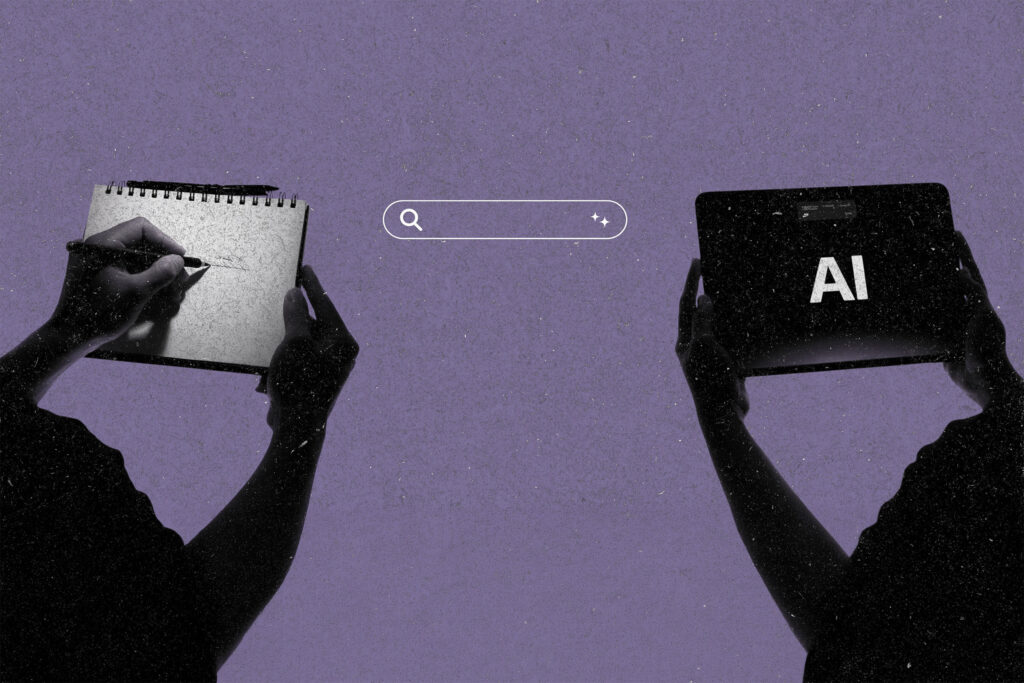
Last year, a professor we work with on several academic websites asked if we ever use AI in our work. I scratched my head and couldn’t think of a reason why we would.
The story is different in 2026. AI has become indispensable to our work, though it remains only a sidekick, never the driving creative force behind a new website.
Adobe’s Firefly has been the tool we use most. It’s hit-and-miss with creating images from prompts alone, but excellent at expanding backgrounds to fit a particular space on a page. Immersive photography on websites often requires wide banner images – far wider than most photos are usually cropped. Using Firefly in Photoshop allows us to expand a blurry landscape or pattern so its fits the given space more cleanly. The previous method took hours of guess work and blended bits of other photos.
OpenAI, Claude and Gemini have proved useful to whip up a bit of PHP code to fix a bug or add a minor feature, saving hours of development time.
We receive daily solicitations from startups with sweeping promises to have their AI build all our sites and save us time and money. We mark them as spam. But I do wonder if an AI agent trained specifically on our catalogue of websites could suggest good design ideas based on our previous work. Or could AI speed up the time it takes to make laborious and repetitive sections of a site once a general template has been made?
Some of those frontiers may enter our workflow in the months ahead. At the same time, sober second thought is needed. I shudder to think at the energy and environmental costs of fully incorporating AI into our production process. I’ve tried Ecosia, a climate-focused AI that promises it “produces enough renewable energy to power all searches twice over.” But their search results have proved underwhelming.
I’ve also grown an aversion to AI email slop. A client we work with is renowned for short, sentence-long emails. So a colleague and I were surprised when we received an articulate, paragraphs long inquiry into our SEO practices. We buckled down and spent hours responding to each point in turn. The reply to our missive was another one-sentence answer. We were duped: I regret spending so much time replying to an AI-generated inquiry that was insincere.
Still, I’m surprised by the pace at which AI tools have become part our daily life. All of this begs the question: will web designers become obsolete? Perhaps. But I wonder if this will be around the same time that websites themselves are obsolete. Later this fall, I’ll spend a day in Vancouver with other web designers at WordCamp trying to discern where all of this is headed – and may return to this post with further reflections.
I agree, we live in interesting times. The minute you think you know what’s going on is the moment you realise you’re behind the times. I believe that website creators who can pivot to this new way of working will not be going out of business for a while, however, the job we do will change over the next few months and years. This has happened before on numerous occasions. Saddle makers had to pivot when horses were no longer the main way of getting around more quickly than walking, and steam engine drivers who could not understand diesel locomotives had to reskill to a new industry or retire.
I think that AI will take over the quick and easy websites that don’t need a lot of thought. People that need something quick and cheap, or who love technology will go for this option. But right now AI is not able to create websites that really mesh with the organization and tell the organization’s story.
The only thing we really know, is that this could all change at a moment’s notice.